Rain Changes the Lake Fast
Heavy rain can cool water, raise water levels, muddy creeks, create runoff, and add current. Bass may reposition quickly, but they usually move for a reason: food, comfort, or cover.
Instead of calling the lake blown out, look for the best version of changed water. Sometimes that is a mud line. Sometimes it is a fresh inflow. Sometimes it is newly flooded grass or bushes.
Where to Start
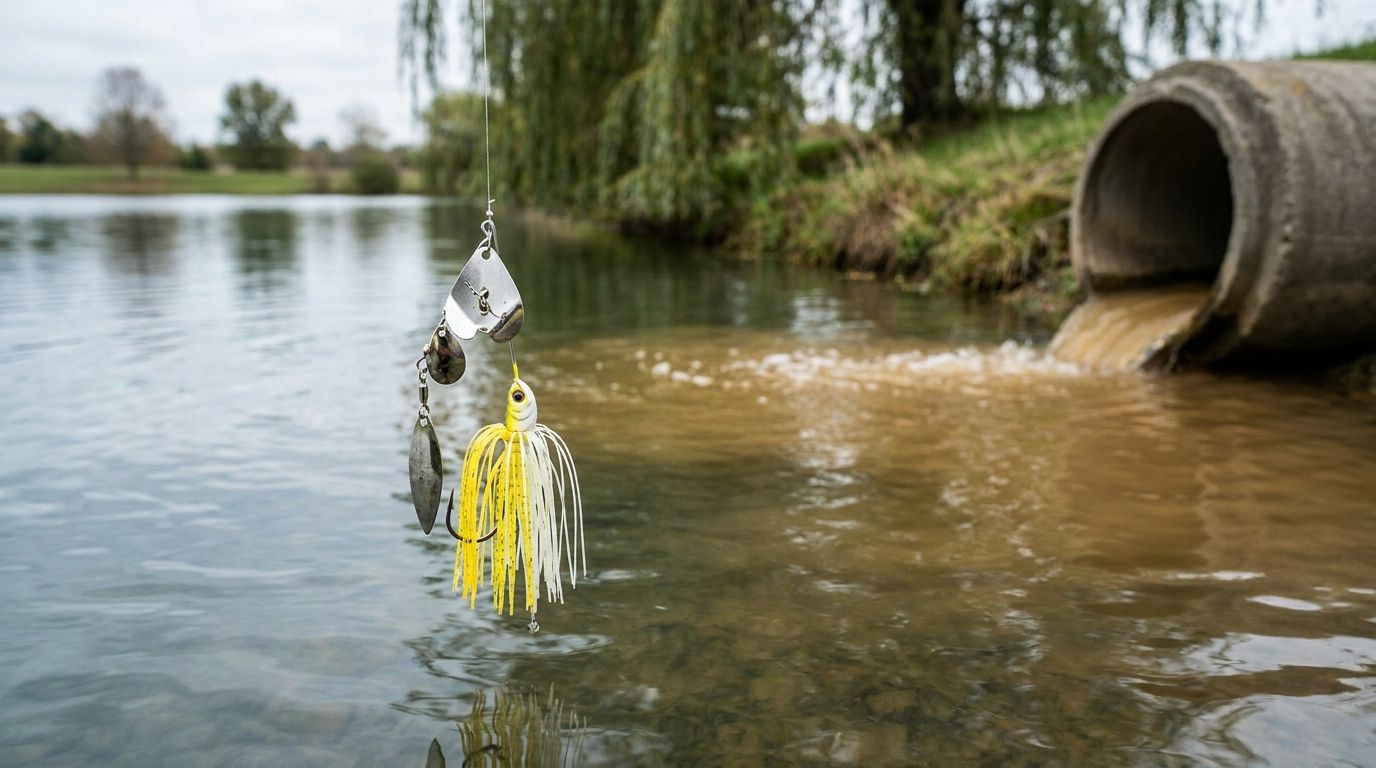
Runoff pipes, creek mouths, culverts, drains, and incoming water can concentrate food. Bass often sit just outside the fastest flow where they can ambush washed-in prey.
Mud lines are also important. The edge between dirty and cleaner water gives bass a visual ambush wall. Cast along the edge rather than straight across it.
Best Lures After Rain
Use vibration and contrast when the water gets dirty. Spinnerbaits, vibrating jigs, squarebills, and buzzbaits are strong. Around flooded cover, flip a jig or Texas-rigged creature bait.
If the rain pulls crawfish activity into play, check the crawdad page. If shad are pushed into pockets or points, browse the shad page.
Adjust by Water Temperature
Warm rain can make bass aggressive and shallow. Cold rain may push them tighter to cover or slightly deeper. If the water temperature drops sharply, slow down with a jig, worm, or compact soft plastic.
Common Mistake
Do not fish the muddiest water just because it is new. The best area often has slightly stained water with current and cover, not chocolate milk with no visibility.
Simple Rule
Find moving water, then find the first ambush spot beside it. That could be a stump, dock post, rock corner, grass point, or drain edge.
For rainfall and stream condition data, use USGS Water Data before and after storms.