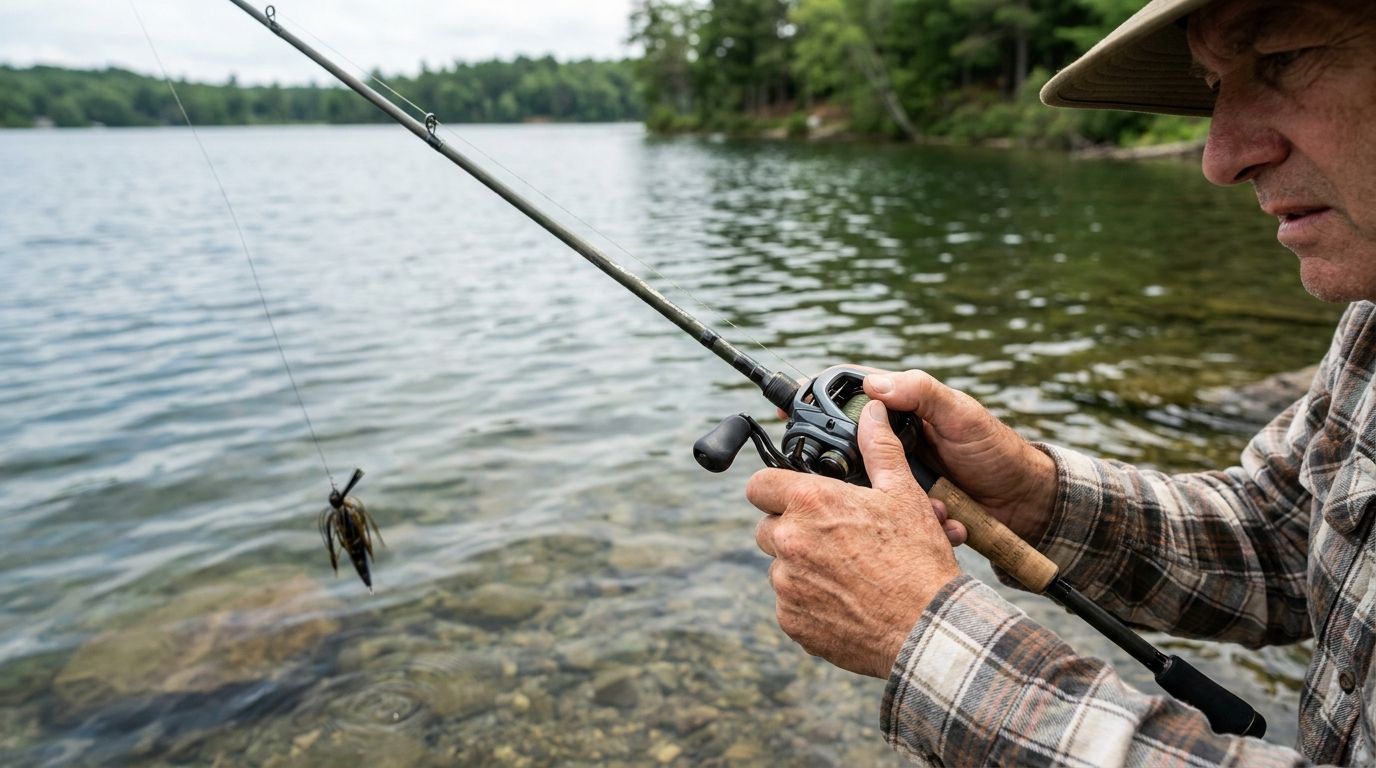
A bass jig can feel intimidating because every rock, stick, and grass stem comes through the rod. That feedback is the reason it works. Once you learn what bottom feels like, you start noticing the tiny changes that signal a bite.
Why it works
Jigs imitate crawfish, bluegill, and bulky prey. They fall into cover, sit naturally on bottom, and give bigger bass a meal worth moving for. A jig also lets you fish slowly without looking lifeless.
Best setup
Start with a 3/8-ounce jig in green pumpkin or black-blue. Add a craw-style trailer. Use a medium-heavy rod, strong line, and a reel fast enough to pick up slack before the hookset.
How to fish it
Pitch or cast beyond the target, let the jig fall on controlled slack, then drag or hop it. Do not rush. Many jig bites feel like weight, mush, or one sharp tick. Reel down and set the hook firmly.
Where to throw it
Jigs excel around docks, laydowns, brush, rocks, grass edges, and steep banks. Use a compact jig in pressured water and a bulkier jig when fish are feeding aggressively.
Common mistakes
Many beginners over-hop the bait. A jig that crawls and pauses often looks more natural. Another mistake is using dull hooks or weak hooksets around heavy cover.
Quick checklist
- Start with 3/8 ounce
- Use a trailer that matches the mood
- Maintain bottom contact
- Set hard after pressure
- Retie around rocks and wood
Final take
A jig teaches patience and feel. Stick with it, and it becomes one of the best tools for catching better-than-average bass.