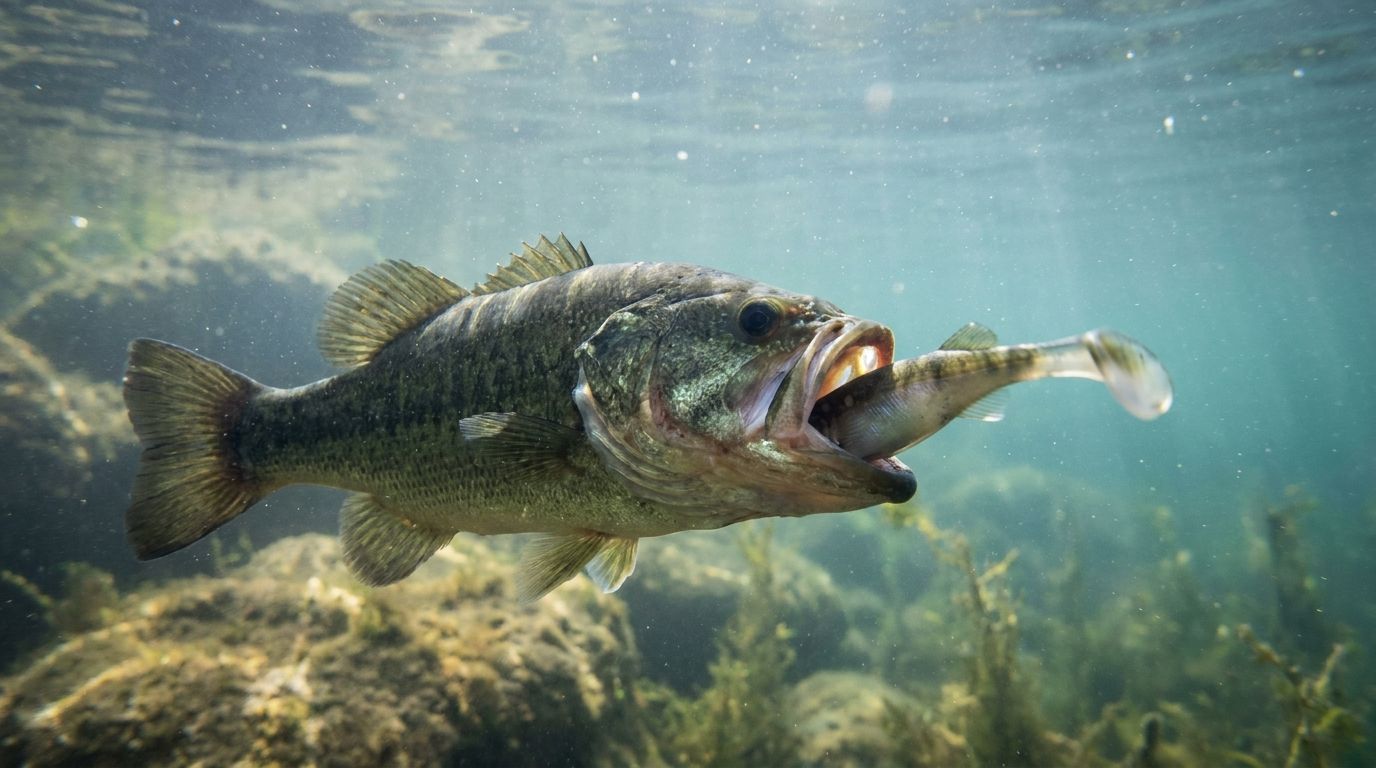
A big swimbait is not the lure to throw when you need twenty small bites. It is the lure to throw when you believe a quality bass is watching bigger forage and willing to commit.
Why it works
Large bass often prefer efficient meals. A realistic swimbait gives them a bigger profile, a natural swim, and a target that looks worth the energy. Even followers can tell you where big fish live.
Best setup
Use gear matched to the bait weight. Smaller hard or soft swimbaits can work on standard casting gear, but heavy baits need a dedicated swimbait rod and strong line.
How to fish it
Make long casts and use a steady retrieve. Add slow pauses or direction changes near cover. Do not panic when a fish follows. Keep the bait moving naturally until it commits or turns away.
Where to throw it
Target points, docks, clear-water grass lines, trout-stocked lakes, big bluegill areas, and ambush routes near deep water. Wind and low light help hide the bait's flaws.
Common mistakes
Do not throw giant baits blindly all day in water with tiny forage. Also do not set too early on big followers that nip at the tail. Let the fish load the rod when possible.
Quick checklist
- Match rod to bait weight
- Use long casts
- Fish near big-fish cover
- Watch followers for clues
- Commit to fewer but better bites
Final take
Big swimbaits are a mindset. You trade numbers for opportunity, and the payoff can be the biggest bass in the area.