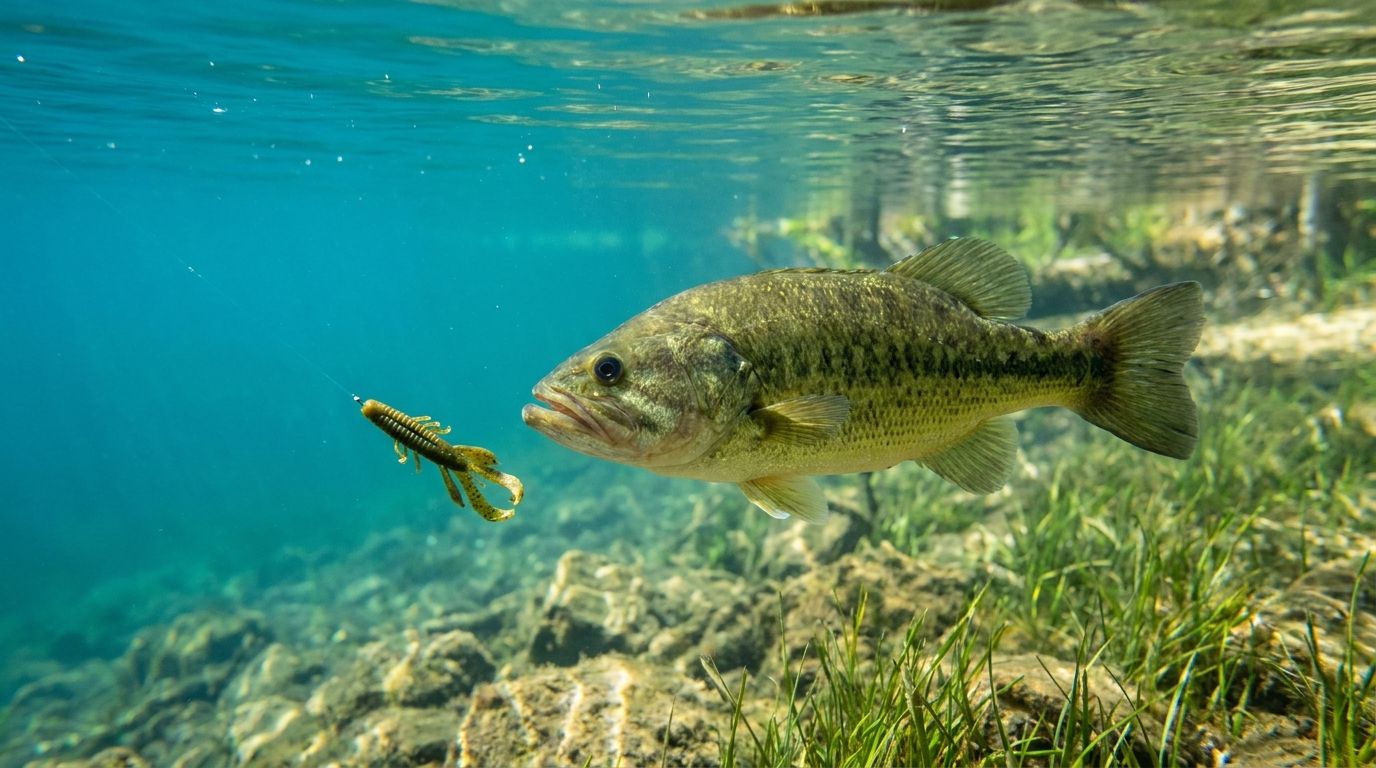
Why Clear Water Changes Everything
In clear water, bass have more time to inspect your lure. That does not mean you must fish tiny baits all day, but it does mean your lure should match the forage, move naturally, and enter the water quietly.
Clear water also expands the strike zone. Bass may follow a bait from several feet away, so line size, cast angle, and retrieve speed matter more than they do in stained water.
Best Natural Color Families
Start with colors that resemble what bass are already eating:
- Shad: pearl, smoke, translucent, silver, and baitfish patterns.
- Bluegill: green pumpkin, watermelon, bream, and sunfish tones.
- Crawfish: green pumpkin orange, brown, amber, and muted red.
The what bass eat by season guide can help you choose the right forage lane before you buy or tie on a lure.
Lures That Excel in Clear Water
A soft swimbait is ideal when bass are tracking shad or roaming points. A drop shot or Ned rig works when fish are visible but reluctant. A jerkbait can trigger suspended bass because it pauses in their face. A natural-colored jig still catches big fish around rock and deep docks.
If you are fishing bluegill lakes, compare options on the sunfish page. For baitfish reservoirs, start with the offshore deep shad kit.
Presentation Tips
Make longer casts than usual. Keep the boat or bank position low and quiet. Avoid throwing a shadow across shallow fish. Use pauses, glides, and subtle twitches instead of overpowering the bait.
Common Mistake
The biggest clear-water mistake is using bright colors just because the water looks pretty. Bright colors can work in wind, clouds, or reaction situations, but natural colors should be your baseline when fish are following and refusing.
For water clarity and fish habitat education, see the U.S. Geological Survey water resources.