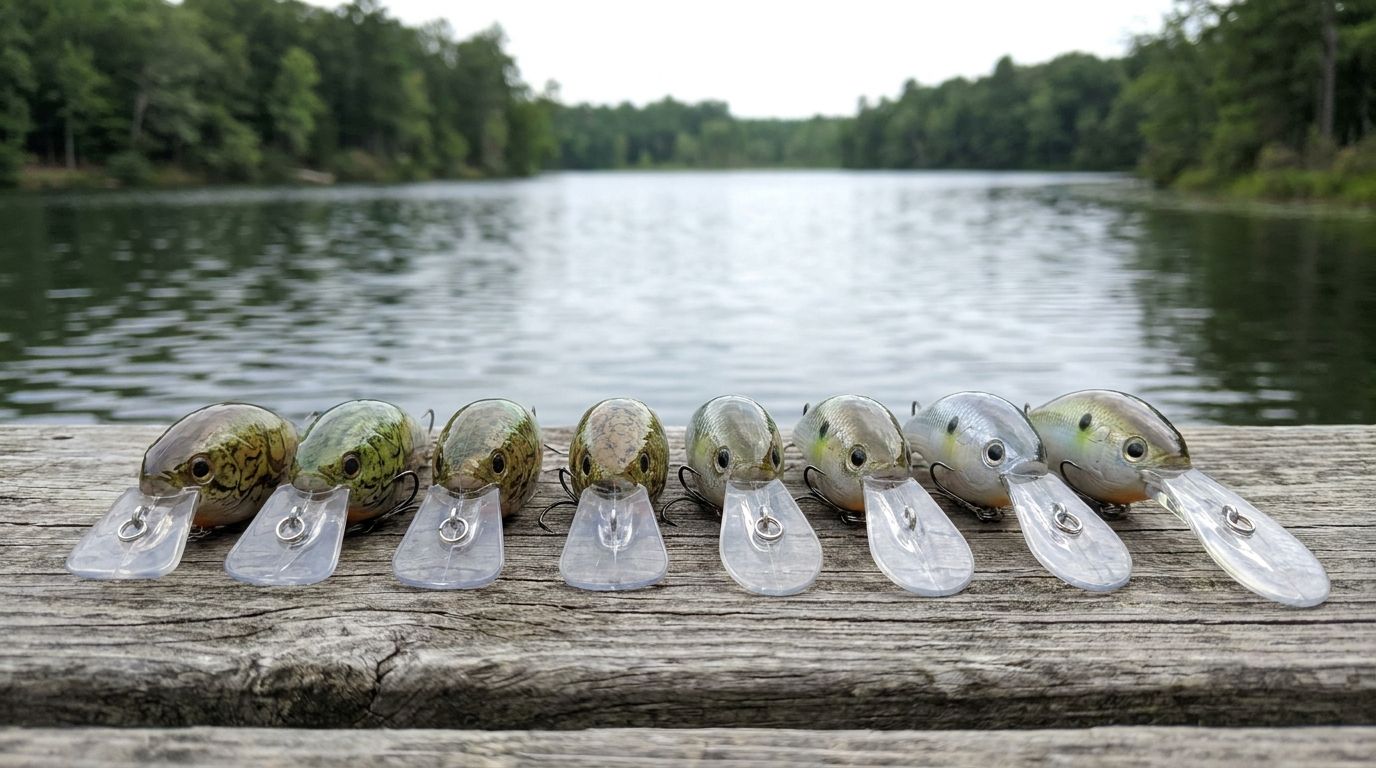
Crankbaits are easy to cast but easy to misuse. The bill, body shape, line size, and retrieve speed all affect how deep the bait runs. Pick the wrong depth and you may spend the whole day fishing above or below the fish.
Why it works
A crankbait triggers strikes by wobbling, contacting cover, and changing direction. The best crankbait usually touches something: rock, wood, grass, or bottom. That deflection makes it look vulnerable.
Best setup
Carry shallow squarebills, medium divers, and deeper plugs. Use a moderate-action rod to keep treble hooks pinned. Lighter line helps a bait dive deeper, while heavier line keeps it higher and gives more control around cover.
How to fish it
Choose a bait that runs slightly deeper than the water you are fishing so it bumps bottom or cover. Reel until you feel contact, then pause or slow down. Many bites happen right after the bait deflects.
Where to throw it
Crank riprap, points, stump flats, channel swings, bridge corners, and grass edges. Squarebills are strong around shallow wood. Medium divers shine on points and rocky banks.
Common mistakes
Do not pick crankbaits by color alone. Depth and action come first. Another mistake is ripping too hard when a fish eats. Sweep into the hookset and keep pressure steady.
Quick checklist
- Pick depth first
- Make contact with cover
- Pause after deflection
- Use moderate-action rods
- Change line size to tune depth
Final take
A crankbait is a precision tool, not just a cast-and-wind bait. Match the diving depth to the target and let contact create the bite.