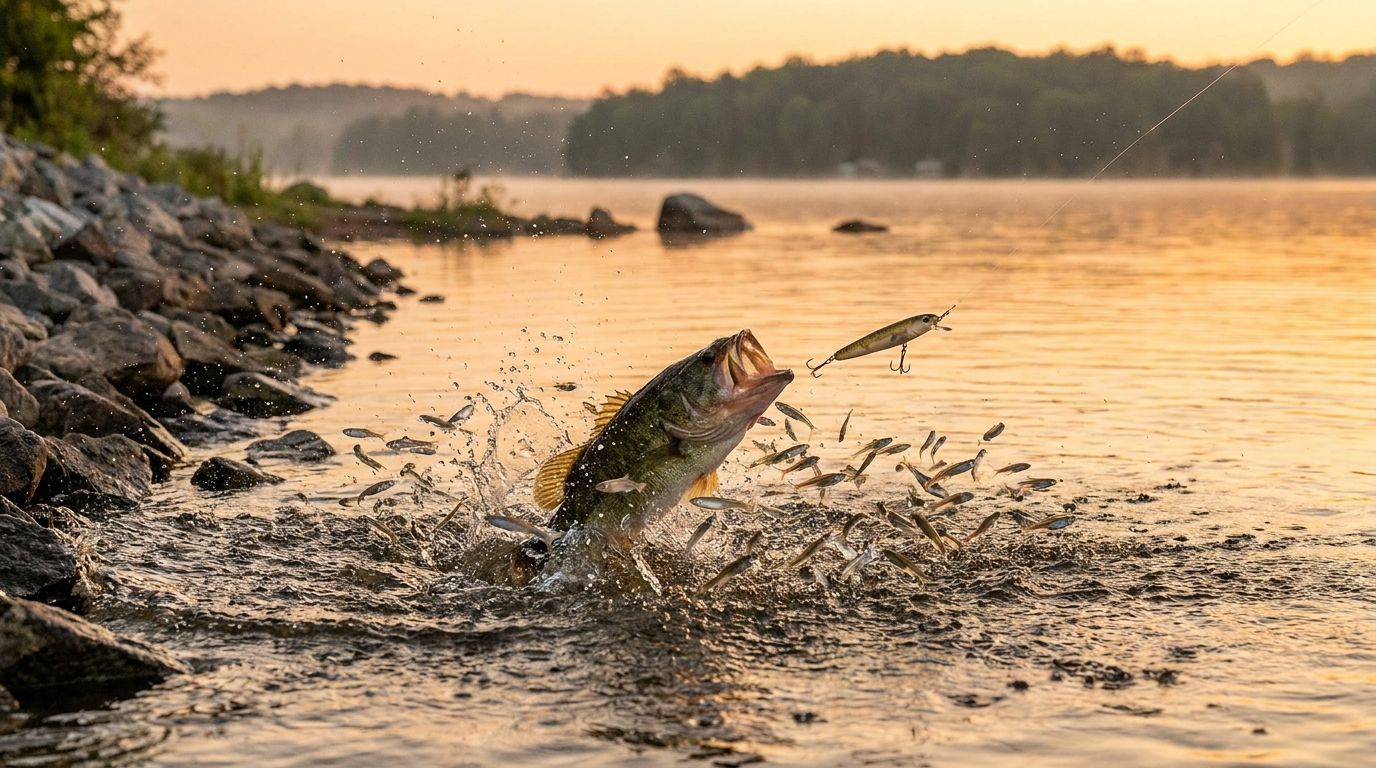
What Makes the Shad Spawn Special
The shad spawn is one of the most exciting bass patterns of the year because it puts baitfish, bass, and shallow cover in the same place at first light. The catch is that the window can be short. On many lakes, the best action happens before the sun gets high.
Shad often spawn by flickering against hard surfaces. Riprap, seawalls, dock posts, grass edges, marina floats, and shallow points are prime places to check. You are looking for nervous bait, surface flashes, and quick swirls that look different from random bluegill activity.
Best Lures for the First Hour
Start with moving baits that imitate a fleeing shad. A spinnerbait, swim jig, vibrating jig, small swimbait, or walking bait can all be right. White, pearl, silver, and translucent colors are reliable starting points.
Make repeated casts along the exact edge where bait is active. Parallel the bank when possible. A cast that stays in the strike zone for twenty feet is usually better than one that crosses it for three feet.
Use the shad collection when you need to build a focused baitfish box, or start with the big gizzard shad kit when larger bait is present.
When the Bite Slows
The biggest shad spawn mistake is staying too long. When the flickering stops, many bass slide to the first break, shade line, or nearby ambush cover. Follow them with a jerkbait, soft swimbait, shaky head, or jig.
| Condition | Adjustment |
|-------|-------|
| Bright sun | Move to shade and deeper edges |
| Windy bank | Keep throwing reaction baits |
| No bait visible | Check points and docks nearby |
| Short strikes | Downsize or add pauses |
A Simple Morning Plan
Pick three likely shad-spawn areas before launching. Fish them quickly at daylight, then commit to the area with the most life. If none show bait activity, switch to bluegill cover or crawfish structure instead of forcing a dead pattern.
For broader forage and reservoir information, the Tennessee Wildlife Resources Agency offers useful fisheries resources for anglers.