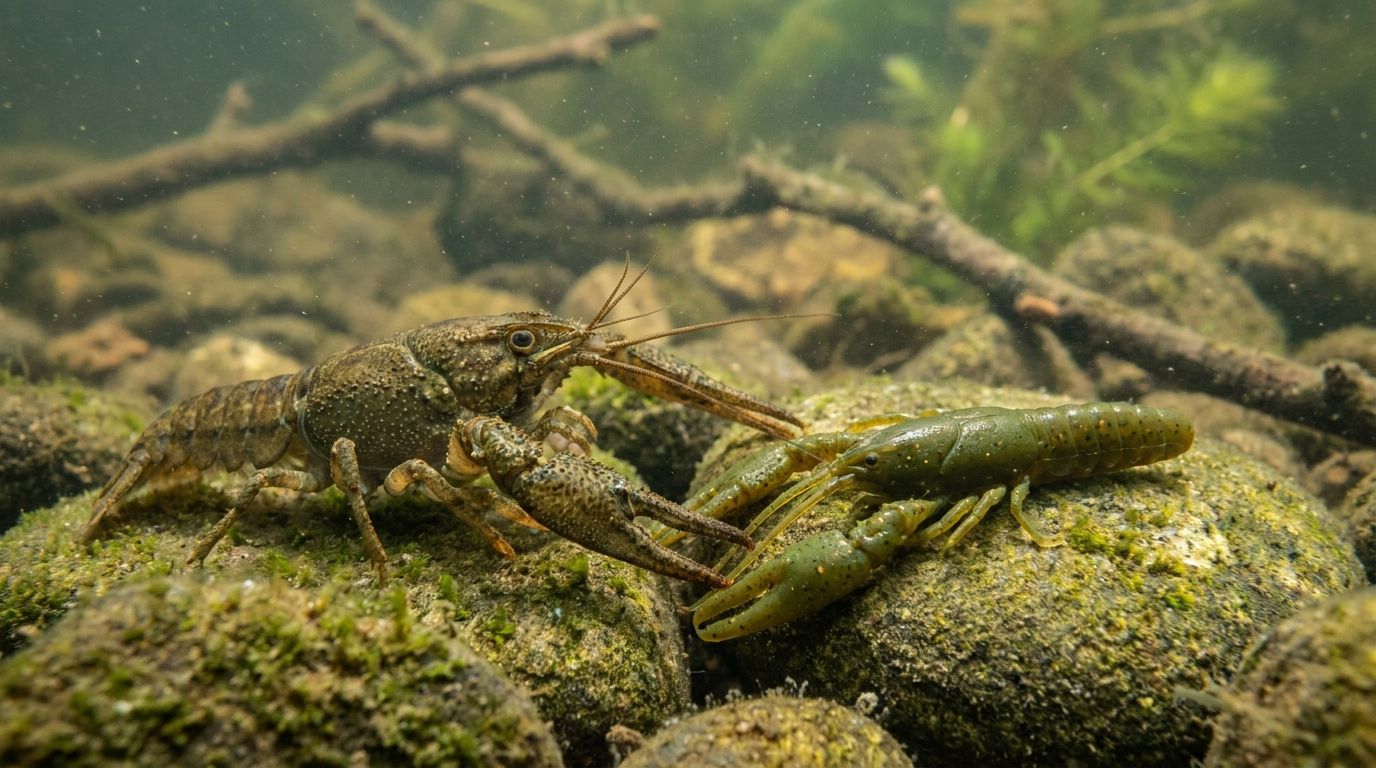
Crawfish Color Does Not Have to Be Complicated
Bass eat crawfish in many lakes, rivers, ponds, and reservoirs. The challenge is choosing a craw color when tackle walls are full of green pumpkin, orange, red, brown, black-blue, and dozens of blended patterns.
You do not need every color. You need a simple system based on water clarity, bottom type, and season.
Start With Water Clarity
In clear water, natural colors usually win. Green pumpkin, brown, watermelon, and subtle orange accents look believable. In stained water, add contrast with black-blue, dark green pumpkin, or stronger orange. In muddy water, silhouette matters more than realism.
Match the Bottom
Crawfish often blend with their environment. Around chunk rock and gravel, brown, green pumpkin, and orange are reliable. Around clay banks, orange and reddish tones can stand out. Around vegetation, green pumpkin and black-blue are strong choices.
The crawdad page is the best starting point for forage-focused craw options.
Seasonal Color Rules
Red and orange tones are popular in late winter and spring because they stand out around warming rock and prespawn banks. As water warms and fishing pressure increases, more natural browns and greens often become dependable.
That does not mean red stops working. It means you should let bites decide. If fish follow or nip a bright craw, tone it down.
Best Craw Lure Types
- Jigs: Best around wood, rock, docks, and grass edges.
- Craw crankbaits: Best for covering rock banks.
- Texas-rigged craws: Best around grass and shallow cover.
- Trailers: Best for changing profile without changing the whole lure.
For a complete bottom-contact setup, check the jig craw trailer kit.
Final Tip
Confidence matters, but evidence matters more. Start with a logical craw color, then adjust based on follows, short strikes, and water clarity.
For crayfish biology and aquatic species information, see USGS Nonindigenous Aquatic Species.