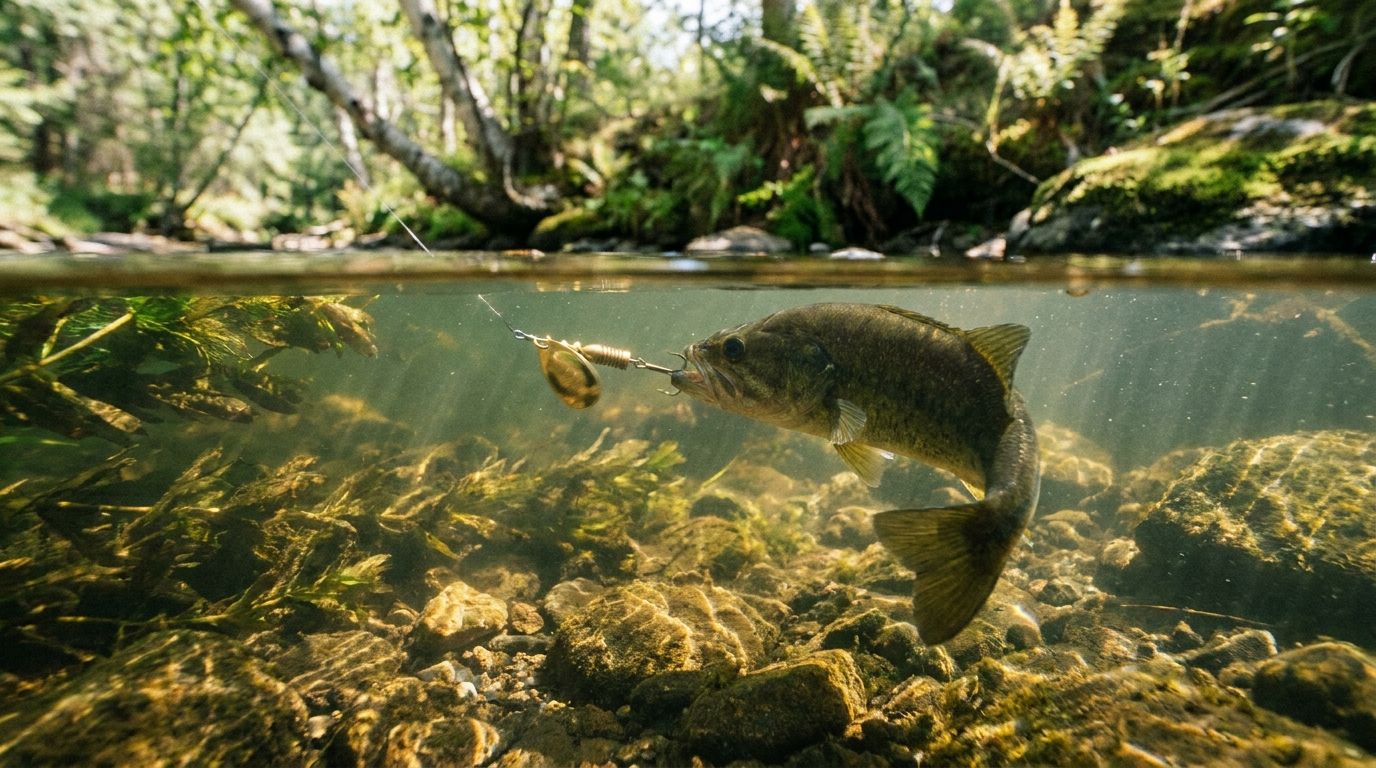
Inline spinners are often marketed to trout anglers, but bass eat them too. A compact spinner is a great tool when you need to cover water, find active fish, or catch bass that are keyed on small forage.
Why it works
The rotating blade gives flash and vibration with a small profile. That makes it useful in clear creeks, pressured ponds, and situations where bass are chasing tiny baitfish.
Best setup
Use a medium-light spinning rod, light line, and a spinner heavy enough to cast. Silver blades work well in clear water and sun. Gold or darker blades can be better in stain, shade, or low light.
How to fish it
Cast across current or along the bank and reel just fast enough to keep the blade turning. If the lure rides too high, slow down or use a heavier size. Add brief pauses near rocks, shade, and grass.
Where to throw it
Try creek pools, bridge edges, riprap, pond spillways, shallow flats, and windy corners. Inline spinners are especially useful when fish are scattered and you need quick feedback.
Common mistakes
Line twist is the main issue. Use a quality swivel and avoid reeling against a fouled blade. Also check hooks often because small trebles dull quickly around rock.
Quick checklist
- Use a swivel
- Retrieve just fast enough to spin
- Cast across current
- Try silver in clear water
- Check for fouled blades
Final take
An inline spinner is small, cheap, and productive. Keep one ready when bass are feeding on small prey or when you need to find fish from the bank.