Why Late Spring Bass Can Be Tricky
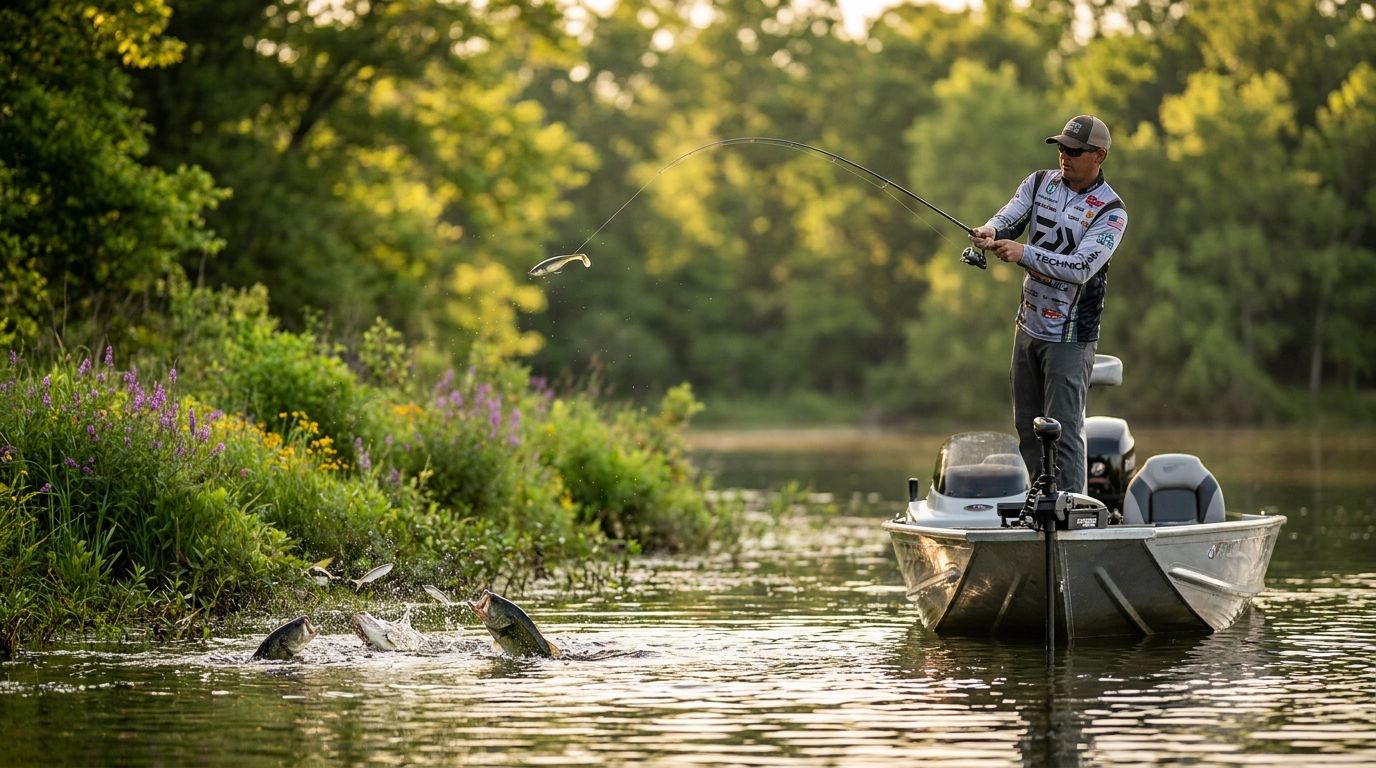
Late spring is one of the best times to catch bass, but it can also be one of the easiest times to overthink. Some bass are still around beds, some are recovering from the spawn, and others are already chasing bait. That means the right lure is less about the calendar and more about what the fish are eating in front of you.
A good late spring plan starts with three forage options: shad, bluegill, and crawfish. Each one points you toward different water, different retrieves, and different lure shapes.
When Bass Are Eating Shad
Shad patterns shine around points, riprap, marina corners, wind-blown banks, and the mouths of pockets. Look for flickering bait, birds, surface dimples, or quick schooling bursts.
Start with a white swim jig, spinnerbait, walking bait, or small swimbait. The key is speed control. If bass are missing the bait, slow down and keep it higher in the water column. If they are following, add a pause or direction change.
For a ready-made shad approach, browse the fall reservoir shad kit or compare forage styles on the shad lure page.
When Bluegill Are the Clue
Bluegill become a major deal after the bass spawn. Bass often stay close to docks, grass edges, laydowns, and shallow cover because bluegill are there harassing beds and feeding around shade.
Use green pumpkin, sunfish, or darker topwater colors. A popping bait, swim jig, squarebill, or Texas-rigged creature bait can all work. Cast tight to cover and make the lure look like an easy meal trying to escape.
When Crawfish Still Matter
Do not put craw colors away too soon. Rock banks, hard-bottom points, and shallow transitions can still produce on jigs and compact crankbaits. Crawfish patterns are especially useful after a cold front when bass stop chasing.
The biggest mistake is fishing only one forage pattern all day. Let the lake tell you what matters. Shad usually means movement, bluegill usually means cover, and crawfish usually means bottom contact. For more forage help, use the bass forage by season guide before your next trip.
For general bass biology and habitat context, see the U.S. Fish and Wildlife Service.