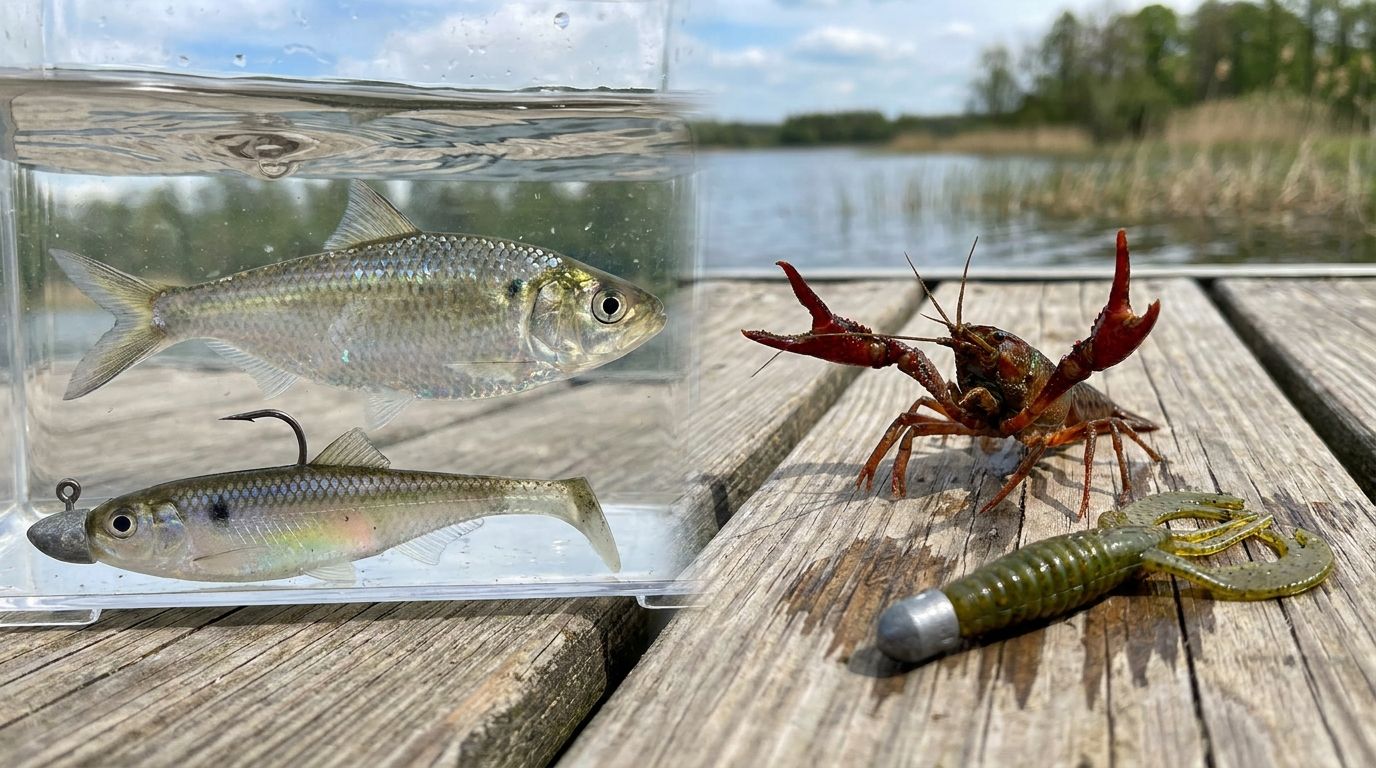
“Match the hatch” simply means making your lure resemble what fish are eating. For bass, that could be shad, bluegill, perch, crawfish, minnows, frogs, or insects. Matching does not have to be perfect, but it should be believable.
Why it works
Bass see prey every day. A lure with the right size, silhouette, color contrast, and movement looks safer to eat than something wildly out of place.
Best setup
Use shad colors around baitfish schools, green pumpkin and brown around crawfish or bluegill, perch patterns where perch are common, and black or high-contrast colors in dirty water.
How to fish it
Look at the bank for bluegill, watch the surface for shad flickers, flip rocks for crawfish color, and check what birds are chasing. Then match size first, action second, and color third.
Where to throw it
Forage matching matters most in clear water, pressured fisheries, and slow presentations. In muddy water, vibration and contrast may matter more than exact realism.
Common mistakes
Do not obsess over paint jobs while ignoring size. A perfect shad color on a bait twice as large as the forage may still look wrong.
Quick checklist
- Match size first
- Match action second
- Match color third
- Use contrast in dirty water
- Watch what bait is present
Final take
The best lure is not always the prettiest. It is the one that looks like an easy meal in the water you are fishing.