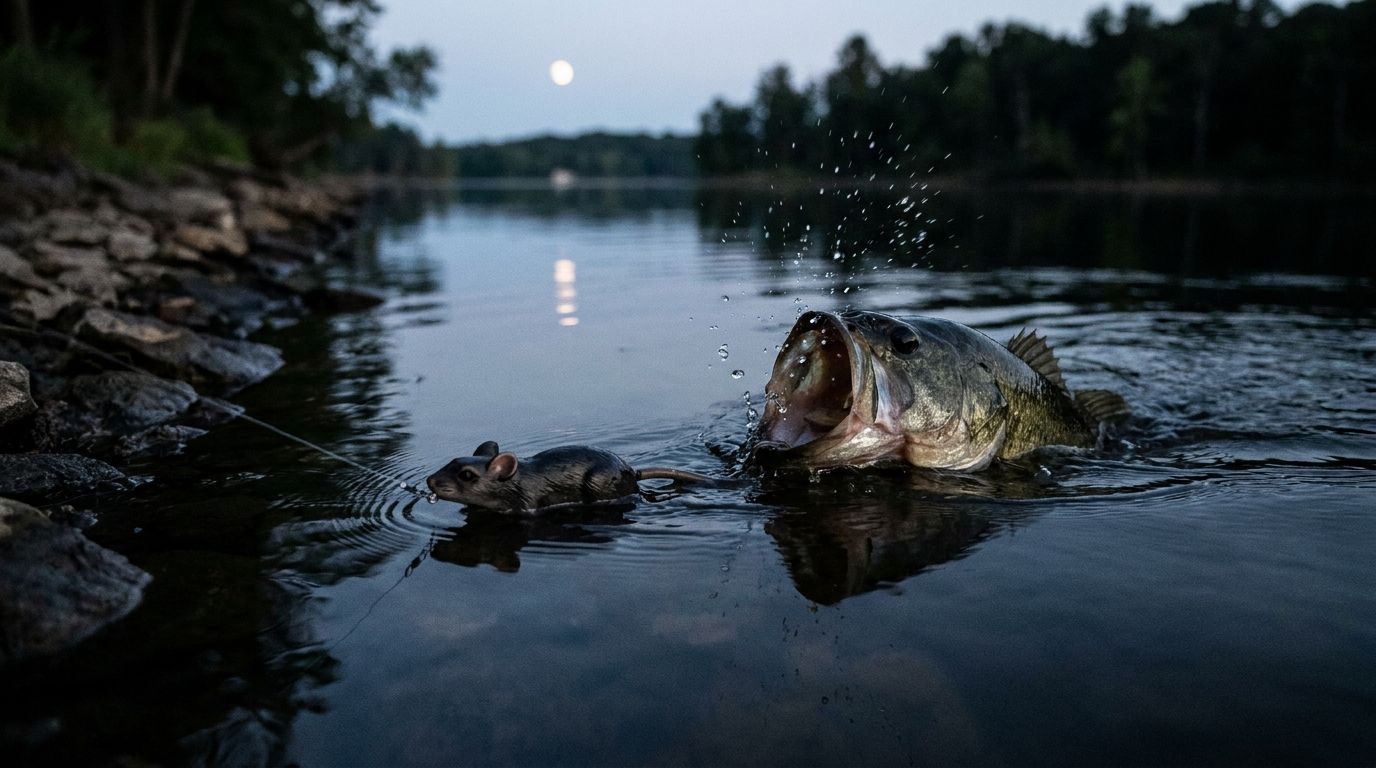
A mouse lure looks odd until you think about where bass live. Rodents, frogs, insects, and small birds can all end up struggling at the surface. A bass does not need to identify the animal perfectly; it only needs to see an easy surface meal.
Why it works
Mouse lures move slowly and create a natural wake. That makes them useful in low light, at night, and around overhanging cover where land-based prey can fall in.
Best setup
Use strong line, a rod with backbone, and a lure that tracks straight at slow speed. Dark colors silhouette well at night, while natural brown or gray can be useful in clear daytime shade.
How to fish it
Cast tight to the bank, overhanging trees, grass edges, and dock shade. Let the bait land, pause, then crawl it slowly. Keep moving through small bumps until the rod loads.
Where to throw it
Best areas include undercut banks, pond edges, lily pads, reeds, grass mats, laydowns, and dark dock corners. Calm water makes the wake easier for fish to track.
Common mistakes
Do not fish a mouse like a buzzbait. It is a slow, deliberate bait. Also avoid setting on the splash; bass often roll on the lure before eating fully.
Quick checklist
- Fish tight to shore
- Use slow wakes
- Pause after splashdown
- Choose dark silhouettes at night
- Wait for rod load
Final take
Mouse lures are not everyday baits, but around the right shoreline cover they offer bass a big, slow surface target.