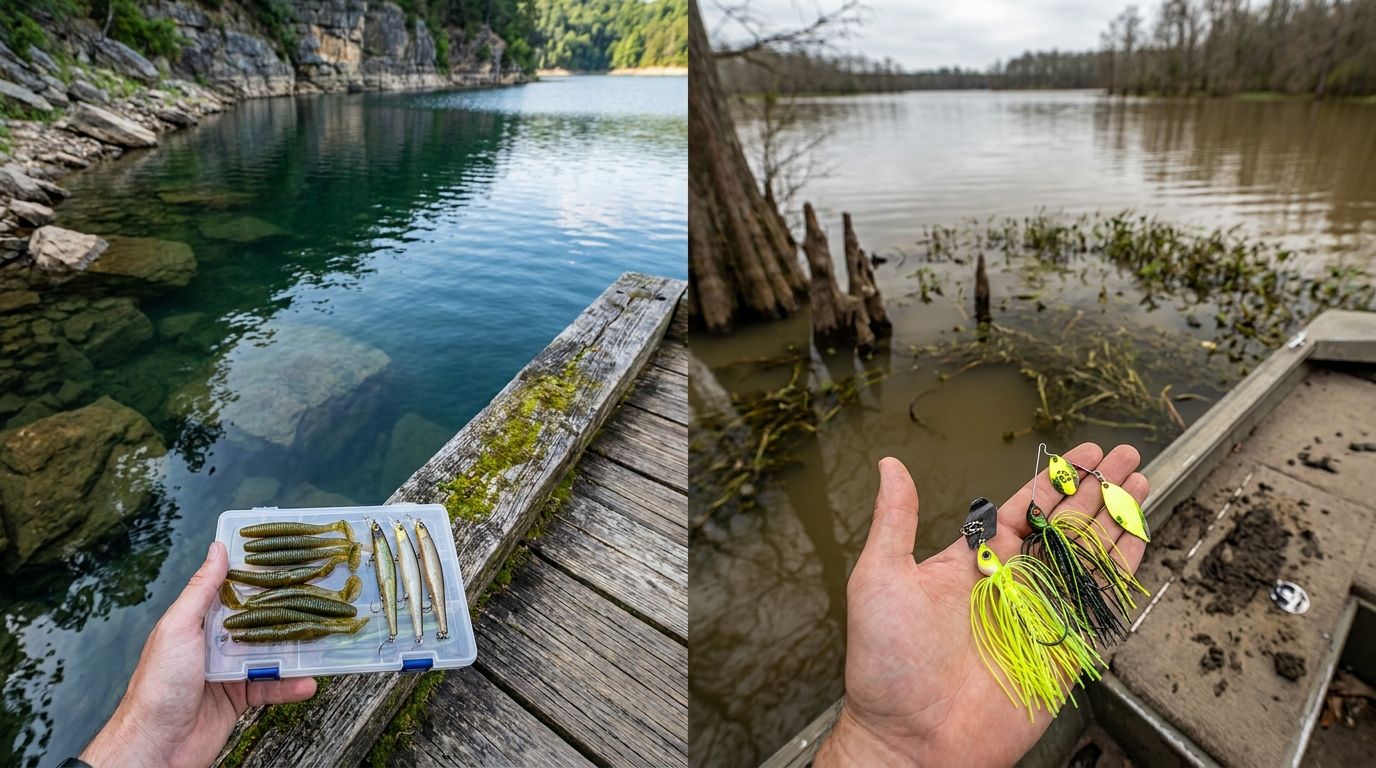
Lake Type Shapes Bass Behavior
A lure that dominates one lake may feel average on another because bass are responding to different forage and habitat. Ponds, reservoirs, natural lakes, and rivers all create different feeding opportunities.
Before choosing a lure, ask what the water gives bass: shad, bluegill, crawfish, grass, current, docks, rock, or offshore structure.
Ponds
Ponds often revolve around bluegill, insects, frogs, and small baitfish. Weightless plastics, topwaters, swim jigs, and small Texas rigs are dependable. Start with the pond bluegill starter kit.
Reservoirs
Reservoirs often have shad, points, ledges, creek arms, docks, and riprap. Spinnerbaits, swimbaits, crankbaits, jigs, jerkbaits, and Carolina rigs all matter. The offshore deep shad kit fits many reservoir situations.
Natural Lakes
Natural lakes often feature vegetation, bluegill, perch, frogs, and shallow flats. Frogs, swim jigs, topwaters, and weedless soft plastics are important. Use the frog page when vegetation is thick.
Rivers
Rivers are current-driven. Compact jigs, tubes, squarebills, spinnerbaits, and swimbaits work around seams, rocks, and eddies. Craw patterns are often strong.
Quick Guide
| Water Type | Forage Focus |
|-------|-------|
| Pond | Bluegill and frogs |
| Reservoir | Shad and crawfish |
| Natural lake | Bluegill and vegetation |
| River | Crawfish and minnows |
Final Tip
Use the best forage by lake type guide before building your box. Matching the water is more useful than chasing random lure trends.
For local fisheries information, visit your state wildlife department or U.S. Fish and Wildlife Service.