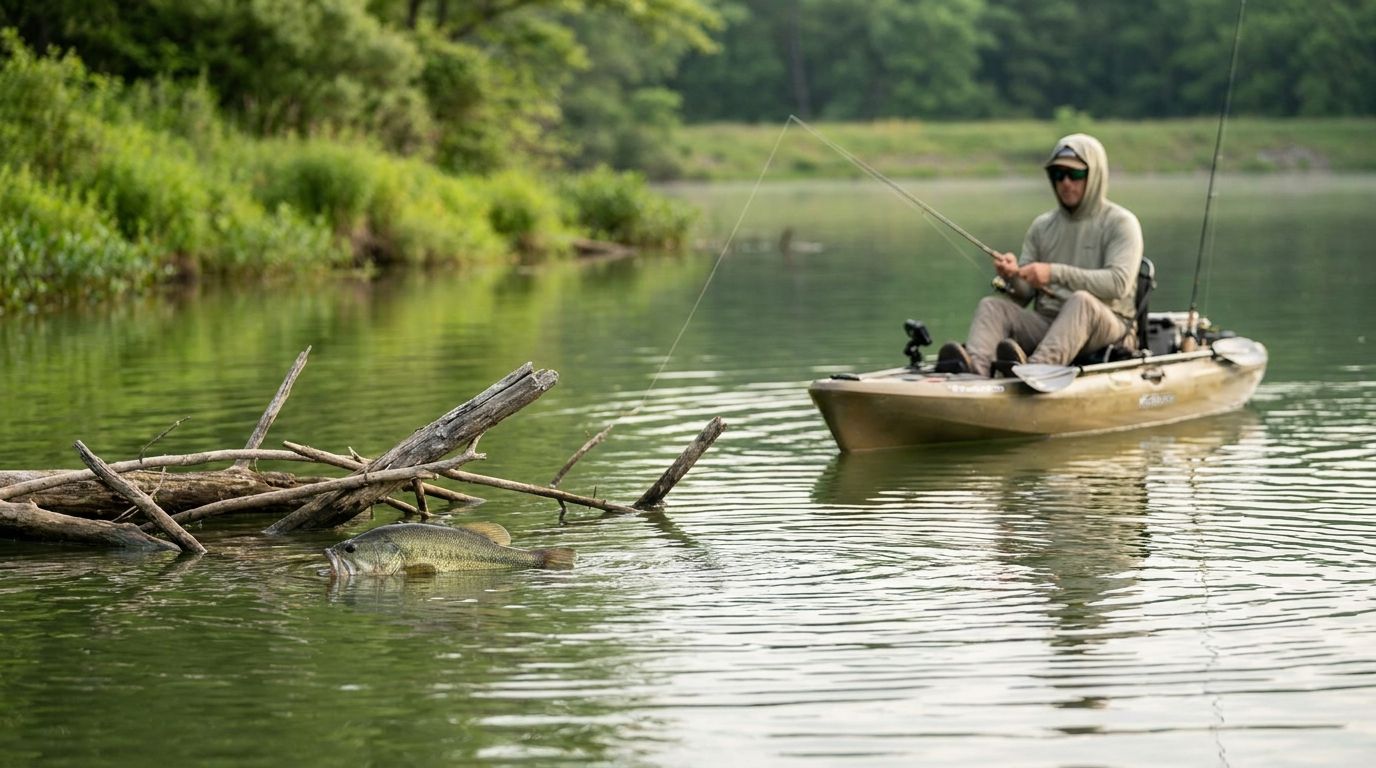
Why Postspawn Bass Feel Scattered
Postspawn bass are not always aggressive. Many fish are recovering, guarding fry, or sliding toward summer areas. That creates a mix of shallow bass, suspended bass, and fish using the first cover outside spawning pockets.
Instead of covering the entire lake, focus on the routes bass use after spawning: pocket mouths, secondary points, dock lines, grass edges, laydowns, and the first deeper water near flats.
Start Shallow Early
Low light is your best chance to catch active fish. A walking bait, popper, buzzbait, or small swimbait can draw strikes from bass feeding on shad or guarding fry. Keep the bait near cover. Random casts across empty water waste the best part of the morning.
If bass only swirl, slow down with a weightless stick bait or soft jerkbait. Let it glide through the same strike zone and watch the line closely.
Shift to Bluegill and Shade
As the sun climbs, bluegill become a major clue. Bass often set up around docks, willow shade, grass holes, and wood because bluegill provide easy meals. This is when a swim jig, Texas rig, squarebill, or compact jig becomes more dependable than open-water topwater.
The bluegill cover kit is built around this exact idea. You can also compare forage styles in the bluegill vs shad guide.
Common Postspawn Mistakes
- Leaving too early: One good stretch may reload when shade improves.
- Fishing too fast after the sun rises: Bass may still bite, but they want tighter casts.
- Ignoring fry guarders: Small surface movement can reveal catchable fish.
- Forcing deep water: Some of the best postspawn fish remain shallow when food and cover are present.
The Best Adjustment
Think of postspawn fishing as a feeding-window game. Fish moving baits when bass are active, then slow down around shade and cover. That one-two approach keeps you from chasing fish that are simply resting.
For additional seasonal management and fish habitat information, visit the Texas Parks and Wildlife Department.