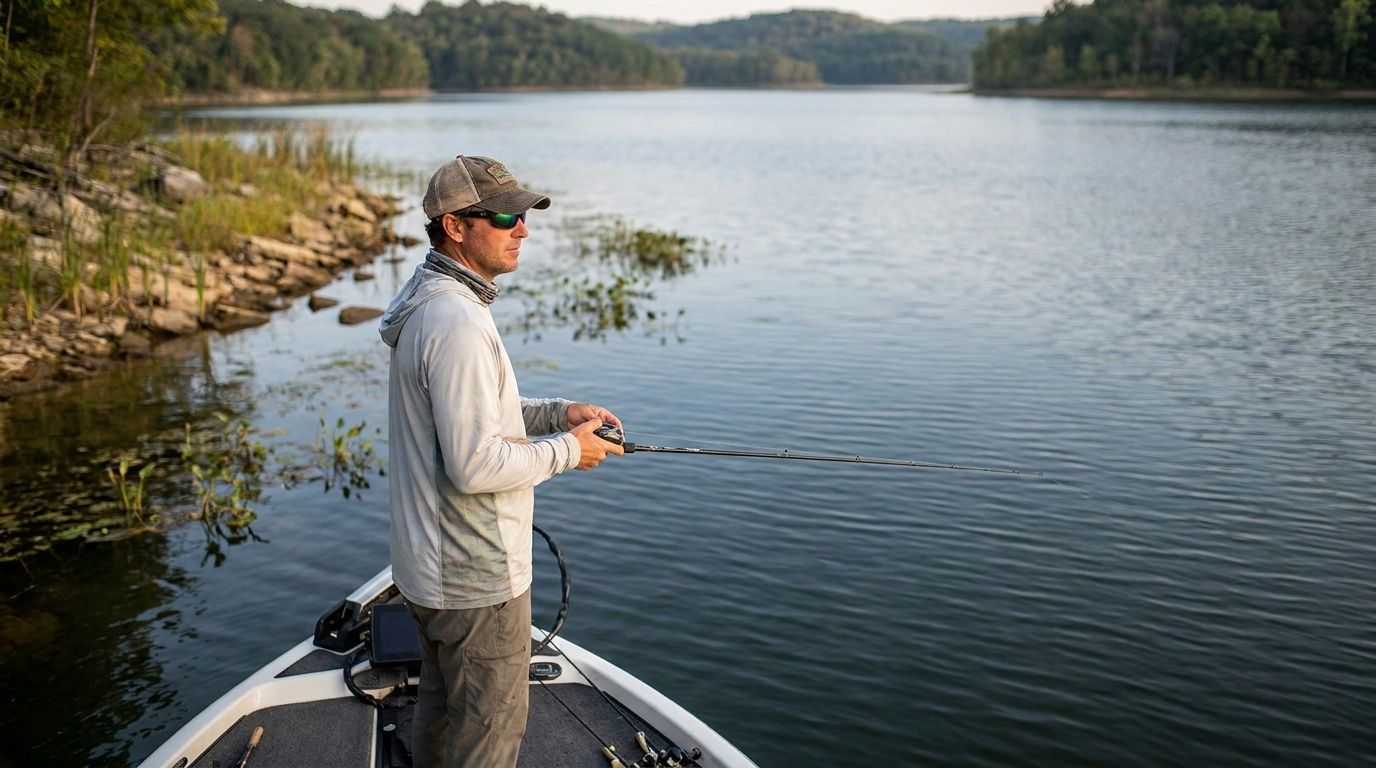
The Reservoir Question
On reservoirs, one of the hardest choices is whether to fish shallow or offshore. Both can be right on the same day. The better question is: where is the most available food, and where can bass feed efficiently?
Shallow bass often relate to cover, shade, bream, crawfish, or a shad spawn. Offshore bass usually relate to shad, current, points, humps, ledges, and brush piles.
When to Start Shallow
Start shallow when there is low light, wind, stained water, rising water, visible bait, or heavy cover. Shallow fish are often more target-oriented, so spinnerbaits, swim jigs, frogs, squarebills, and Texas rigs work well.
If bluegill are active, the bluegill cover kit is a strong shallow option. If crawfish are the deal, browse the crawdad page.
When to Look Offshore
Move offshore when the sun gets high, water stabilizes, bait pulls out, or you see fish on points and channel swings. Offshore does not always mean deep. Sometimes the key depth is only eight to twelve feet.
Shad-style swimbaits, deep crankbaits, football jigs, Carolina rigs, and drop shots all have a place. The offshore deep shad kit is designed for this kind of bite.
A Simple Decision Table
| Clue | Start Here |
|-------|-------|
| Wind on bank | Shallow reaction baits |
| Bluegill around docks | Shallow cover |
| Bait on points | Offshore shad pattern |
| Bright calm midday | Offshore or shade |
| Muddy water | Shallow cover |
Best Advice
Do not commit to a depth before the lake gives you evidence. Check one shallow feeding area and one offshore staging area early. The one with bait, bites, or visible life should shape the rest of your day.
For reservoir fisheries information, see the U.S. Army Corps of Engineers recreation resources.