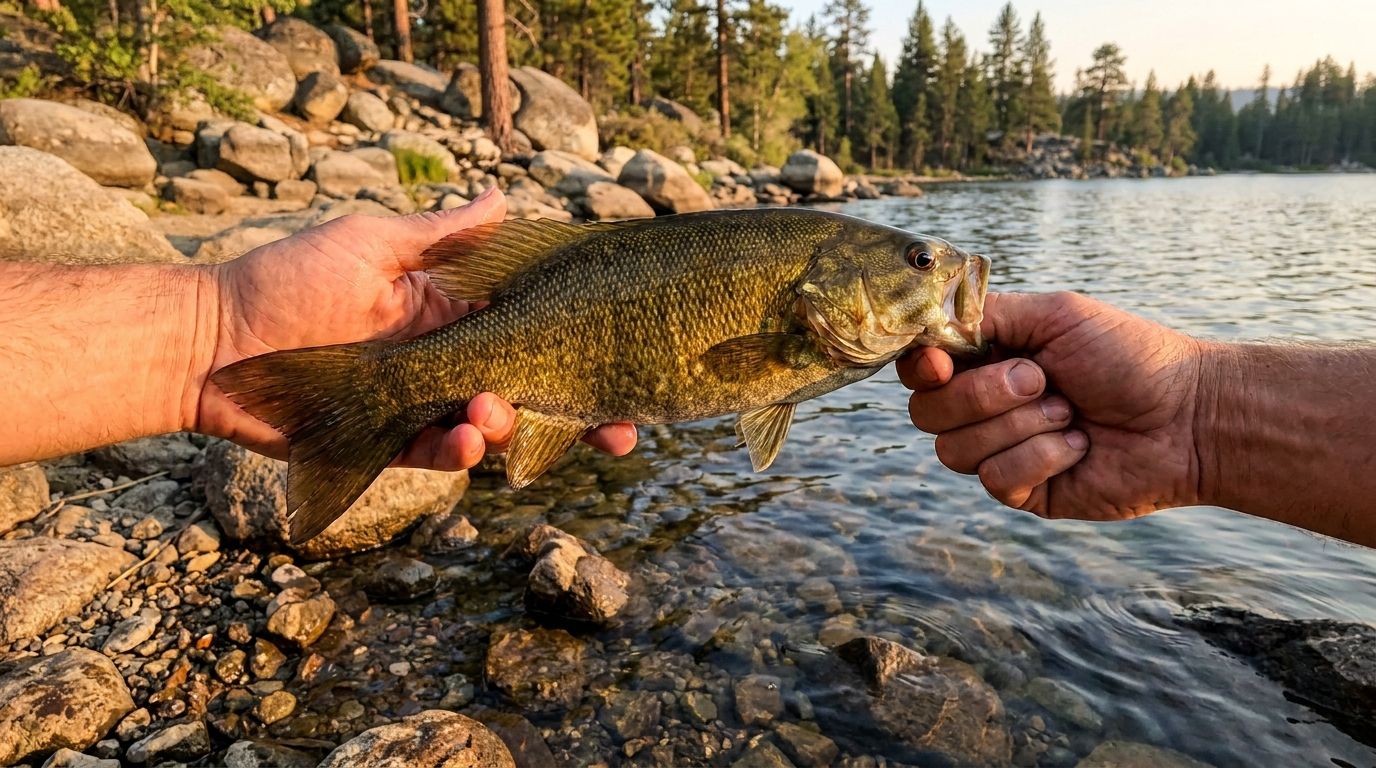
Smallmouth bass are built for rock, current, and clear-water feeding. They often roam more than largemouth, but they still use edges: boulder seams, gravel transitions, shade, and current breaks. The right lure should stay in contact without looking dead.
Why it works
Rock concentrates crawfish, baitfish, and insects. It also gives smallmouth a place to pin prey. When your lure ticks rock, deflects, pauses, and starts again, it looks like food making a mistake.
Best setup
Pack a tube, Ned rig, small swimbait, jerkbait, and compact crankbait. Use lighter line in clear water, but do not go so light that you cannot control the fish around rock. A medium or medium-light spinning rod handles most finesse presentations.
How to fish it
Cast at an angle instead of straight at the bank. Keep the bait in the strike zone longer by working it parallel to the rock line. With bottom baits, drag more than hop. With moving baits, pause after contact with rock.
Where to throw it
Look for chunk rock beside gravel, isolated boulders, bridge riprap, current seams, and points that drop into deeper water. The first deep water beside shallow feeding rock is especially important after cold fronts.
Common mistakes
Do not overwork the bait. Smallmouth will chase, but they also inspect. A bait that darts constantly can look fake in clear water. Also avoid dragging exposed hooks through sharp rock unless you like retying.
Quick checklist
- Fish parallel to rock
- Use craw and baitfish colors
- Pause after deflection
- Watch line on the fall
- Retie after abrasion
Final take
For smallmouth, rock contact is not a problem. It is the point. Pick lures that can touch bottom, deflect, and keep moving naturally.