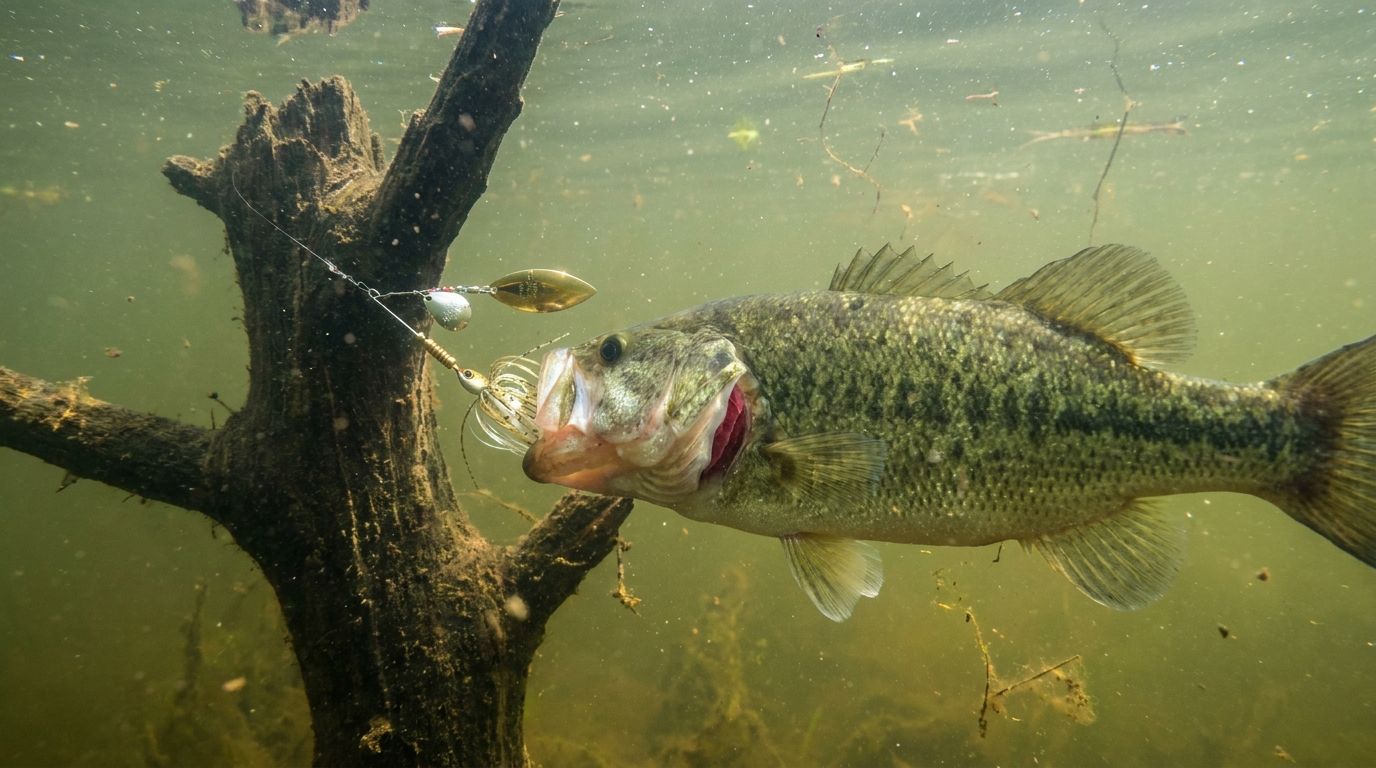
Spinnerbaits have been catching bass for decades because they combine flash, vibration, and snag resistance. They do not look exactly like one baitfish, but they feel like commotion. In the right conditions, that matters more.
Why it works
A spinnerbait calls fish from a distance. Blades flash like baitfish, thump through stained water, and help the lure ride over cover. Bass can track it even when visibility is poor.
Best setup
Use willow blades for flash and speed, Colorado blades for thump, and tandem blades for a balanced middle ground. White, chartreuse-white, and bluegill colors cover most situations.
How to fish it
Cast past the cover and bring the bait close enough to bump it. Slow-roll in cooler water, burn it when fish are chasing, and add a stop-and-go retrieve around isolated targets.
Where to throw it
Windy banks, laydowns, grass edges, dock corners, riprap, and shallow stained water are prime spinnerbait areas. Cloud cover makes the bite even better.
Common mistakes
Do not retrieve in empty water only. Spinnerbaits are best when they contact cover or pass tight to it. Also avoid using blades too subtle for muddy water.
Quick checklist
- Use wind to your advantage
- Bump cover when possible
- Slow-roll in cooler water
- Use more thump in dirty water
- Keep the hook sharp
Final take
When bass are active and visibility is not perfect, a spinnerbait gives them flash, vibration, and an easy target.