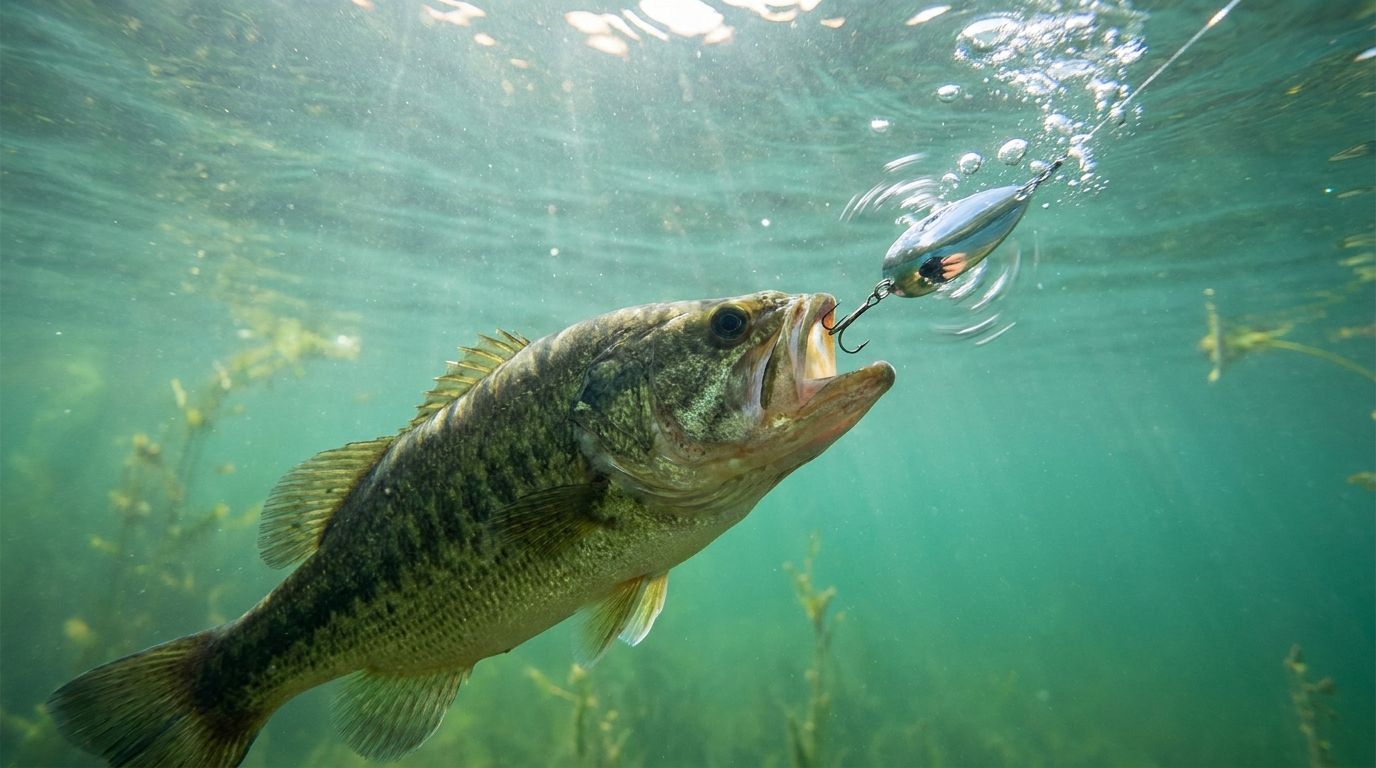
Spoons are not trendy, but they do something few lures do as well: flash and flutter like a dying baitfish. When bass are under bait or holding deep, that falling action can be deadly.
Why it works
A spoon gives off flash on the lift and flutter on the fall. Bass often strike as it drops, especially when they are watching injured shad fall out of a school.
Best setup
Use a spoon size that matches the forage. Pair it with line strong enough to handle deep hooksets but thin enough to let the lure fall naturally. Keep treble hooks sharp.
How to fish it
Drop vertically to fish or cast beyond schooling activity. Lift the rod, let the bait fall on semi-slack line, and watch for line jumps. In colder water, use smaller lifts and longer falls.
Where to throw it
Spoons work under bait balls, on deep points, near bluff walls, around bridge pilings, and below schooling fish. They also work on windy banks where shad are being pushed.
Common mistakes
The common mistake is keeping too tight a line on the fall. If the lure cannot flutter, it loses much of its appeal. Also avoid oversized spoons when bass are feeding on tiny bait.
Quick checklist
- Match spoon size to bait
- Watch line on the fall
- Keep hooks sharp
- Use vertical drops around bait
- Try smaller lifts in cold water
Final take
When bass are feeding on shad, a spoon gives them the classic wounded-bait fall that is hard to ignore.