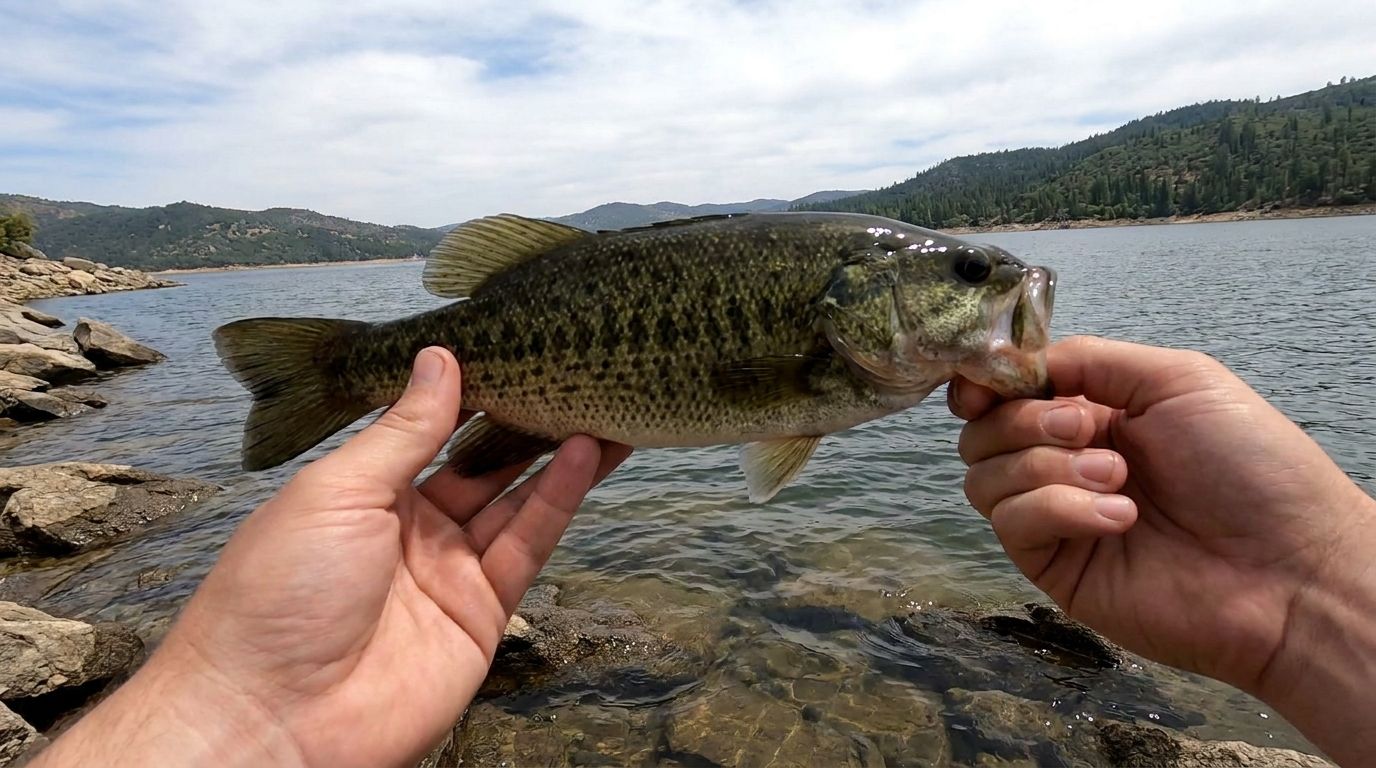
Spotted bass are not just smaller largemouth. They often relate harder to depth, current, rock, and baitfish. That means the best approach is usually more precise and more vertical than a typical shallow largemouth pattern.
Why it works
Spots are comfortable feeding off structure. They can suspend around bait, sit on deep rock, or use current seams to wait for easy meals. A lure that stays in their face without overpowering them usually wins.
Best setup
Good spotted bass tools include a drop shot, shaky head, small football jig, underspin, compact swimbait, and jerkbait. Natural baitfish colors work well in clear water, while green pumpkin and craw colors are reliable on rock.
How to fish it
Use electronics, visible current seams, or bank clues to find the break. Cast upstream or across current and let the bait move naturally. If fish are deep, do not rush the retrieve. A slow shake or small lift can look more convincing than a big hop.
Where to throw it
Start on rocky points, bluff ends, bridge pilings, dam areas, offshore humps, and channel swings. In rivers, target current breaks behind boulders, laydowns, and eddies.
Common mistakes
The most common mistake is fishing too shallow all day. Another is using a bait that is too bulky when the fish are feeding on small shad. Keep one downsized bait ready.
Quick checklist
- Find rock plus depth
- Use current to move the bait
- Keep one finesse rig ready
- Downsize around small shad
- Fish the same school from several angles
Final take
Spotted bass reward clean casts and smart positioning. Find current, rock, or suspended bait, then put a compact lure where the fish can see it.