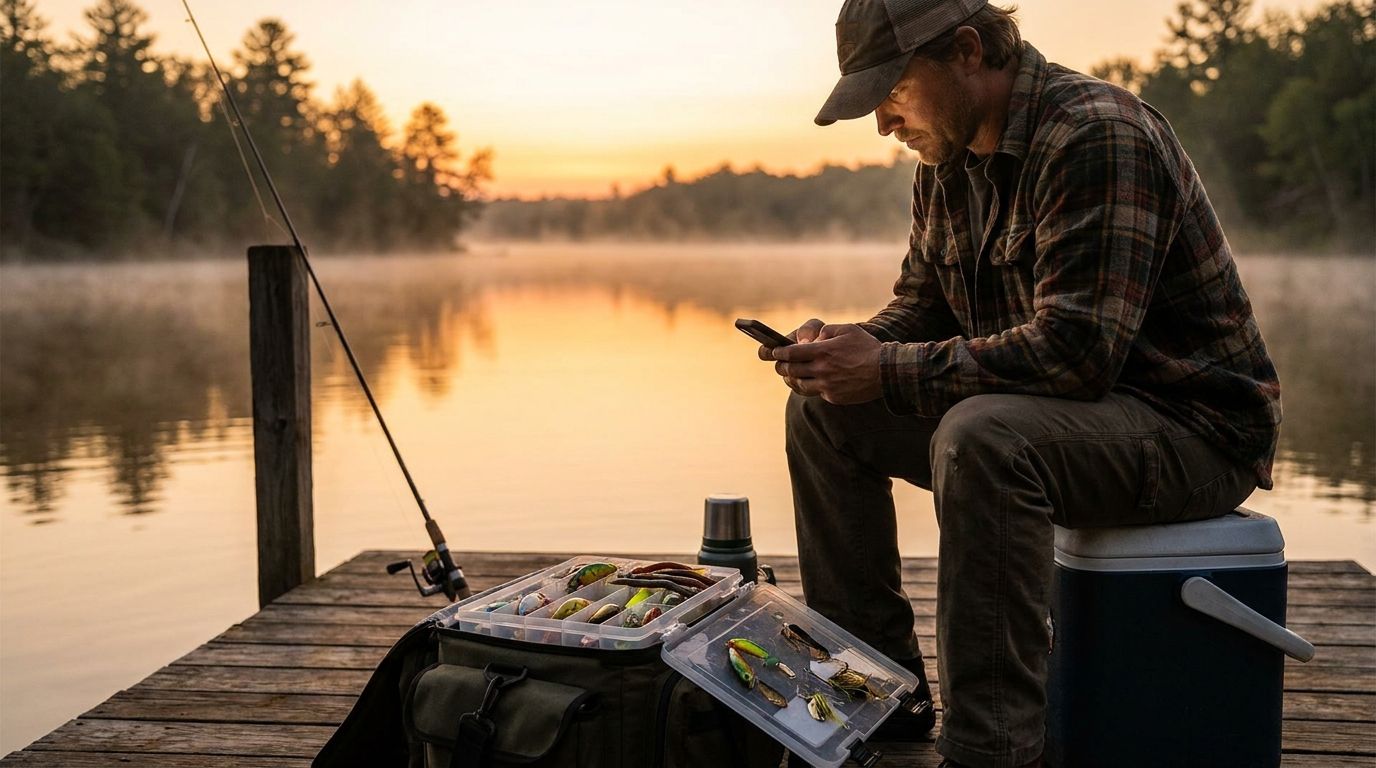
Better Trips Start With Forage
Most lure decisions become easier when you start with one question: what are bass most likely eating today? Natural Bass Lures is built around that idea. Instead of choosing random baits, you can narrow your plan by shad, crawfish, frogs, sunfish, and live-bait-style forage.
A quick forage check before a trip helps you pack less and fish with more confidence.
Step 1: Match the Season
Use the what bass eat by season guide to identify likely food sources. Spring often brings crawfish, shallow baitfish, and spawning-related patterns. Summer adds bluegill, frogs, grass, shade, and offshore shad. Fall often revolves around baitfish. Winter favors slow shad and craw presentations.
Step 2: Match the Lake Type
A pond with bluegill and grass should not be approached like a deep shad reservoir. Use the best forage by lake type guide to separate pond, reservoir, river, and natural lake patterns.
Step 3: Pick the Forage Page
Use the shad page for baitfish activity, the crawdad page for rock and bottom contact, the frog page for mats and vegetation, and the sunfish page for bluegill cover.
Step 4: Build a Small Plan
Choose one moving bait, one slower bait, and one backup for tough conditions. That gives you enough flexibility without overloading your day.
Common Mistake
Do not pack for every possible pattern. Pack for the most likely forage, then adjust only when the water gives you new evidence.
Final Tip
The fish finder tool and seasonal starter pack can help turn forage clues into a practical lure plan.
For broader fishing participation and conservation resources, visit Take Me Fishing.