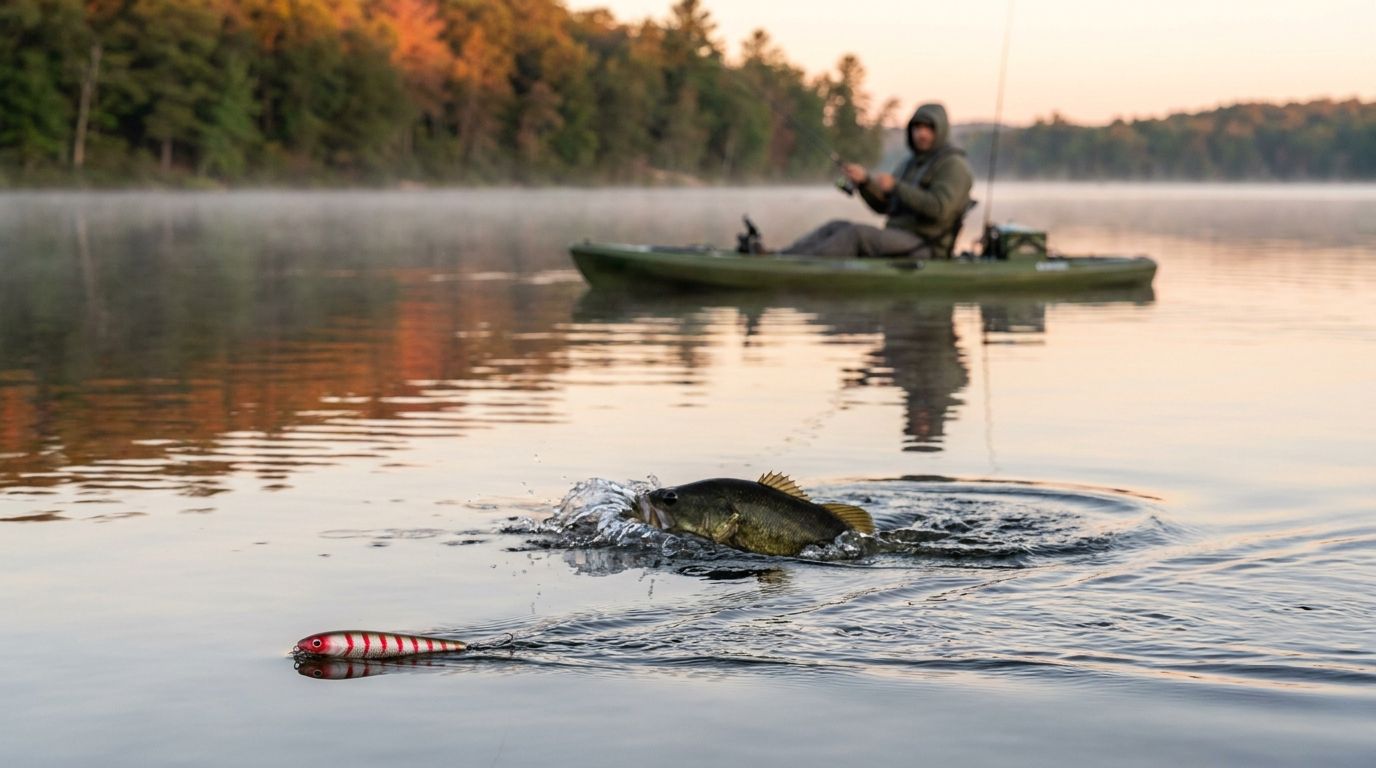
Walking baits shine when bass are spread out and looking up. The side-to-side action keeps the bait in view while still covering water faster than a popper or frog.
Why it works
The walking motion imitates a fleeing baitfish. It creates surface disturbance without diving, which makes it easy for bass to track from below.
Best setup
Use a rod with a softer tip, a high-speed reel, and line that floats or does not pull the nose down too much. Bone, chrome, shad, and black are good starting colors.
How to fish it
Point the rod tip down, twitch with slack line, and reel just enough to pick up slack. The rhythm is more important than power. Change cadence when the bait crosses a point, shade line, or school of bait.
Where to throw it
Fish walking baits on flats, points, seawalls, schooling fish, shallow bars, and over submerged grass. They are excellent in low light and when baitfish are near the surface.
Common mistakes
Most anglers work the bait too hard. Use slack and rhythm. Also avoid stopping too long around schooling fish unless they are short-striking.
Quick checklist
- Twitch on slack line
- Keep rod tip low
- Use long casts
- Change cadence near targets
- Wait for weight before setting
Final take
A walking bait is a search tool with attitude. It covers water, calls fish up, and creates the kind of fleeing action bass love to chase.