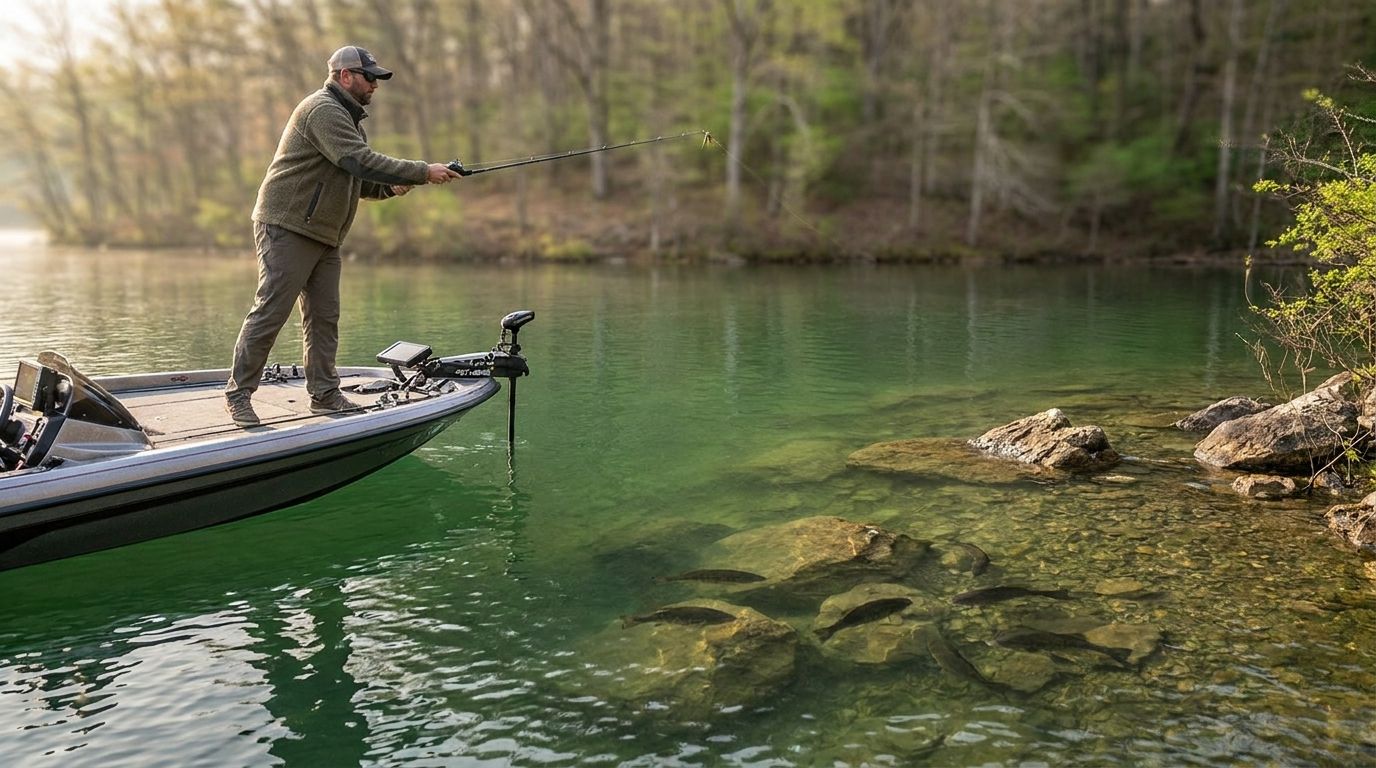
What Is a Staging Area?
A staging area is a piece of structure that bass use as a holding and feeding location immediately before moving to spawning flats. Think of it as the last stop before the beds — where fish pause, eat, and wait for conditions to be right.
Staging areas have specific characteristics: they're adjacent to spawning habitat, they have some depth (typically 8–20 feet), they offer forage and some type of bottom feature, and they position fish so they can feel warming water pushing from the shallow flats.
Find the staging areas on your home lake and you'll find the most catchable, most aggressive fish of the entire year. In good conditions, a single staging point can hold twenty or thirty bass stacked in a tight area.
The Anatomy of a Staging Area
Proximity to Spawning Habitat
The single most important factor. Staging areas are between the winter deep-water haunts and the spawning flats. On most reservoirs:
- Winter fish are at 25–40 feet on main-lake structure
- Spawning flats are at 0–6 feet in coves and protected banks
- Staging areas are at 8–18 feet, typically on the last major structural element before the flat
If you draw a line from the deep water to the spawning bank, the staging area is somewhere along that route — usually the most pronounced structural feature in that transition zone.
Key Structural Elements
Creek channel bends adjacent to flats: Where a submerged creek channel makes a bend close to a spawning cove, bass stage on the inside or outside of that bend at 10–18 feet.
Secondary points inside coves: The first point you encounter when running from the main lake into a spawning cove. Bass move from the main lake, stop at the secondary point, then move onto the flat when ready. This is probably the most consistent staging structure on most reservoirs.
Submerged roadbeds: On impoundments that flooded existing terrain, old roads leading to what were once valleys and flats create staging structure. Bass follow the high edges of these roadbeds.
Depth breaks adjacent to spawning banks: Even a modest 2–3 foot ledge between a flat and a deeper adjacent channel can be a staging area if it's adjacent to a protected south-facing bank with appropriate bottom type.
Boat dock ends: Dock ends in the 8–12 foot range inside spawning coves are staging goldmines. The dock provides structure; the depth is right; the proximity to shallow flats is perfect. Some of the biggest pre-spawn bass of the year come off dock ends in February and March.
How to Find Staging Areas on a New Lake
Step 1: Find the spawning flats first. Identify protected coves with the right bottom — firm sand or gravel in 1–4 feet, ideally with some northern exposure (south-facing banks warm faster). On your lake map, these appear as shallow protected areas.
Step 2: Trace backward. From each flat, look at what structural elements exist at 8–20 feet adjacent to the flat. Secondary points, channel bends, depth changes — these are your candidates.
Step 3: Verify with electronics. Idle the candidates in pre-spawn season. Look for:
- Hard bottom marks (staging fish prefer firmer substrate)
- Baitfish in the staging depth range
- Bass marks tight to bottom or slightly elevated
Timing Your Visits
Staging fish move — they don't camp permanently on a staging area. On a warm, stable day with temperatures trending up, fish move shallow on the staging area. After a cold front, they drop back toward deeper adjacent structure.
The most reliable approach: fish staging areas during the warming trend after a cold front has stabilized. Don't go the day after the front — go when the high pressure moves and temperatures start recovering. Fish will be actively feeding after days of inactivity.
Techniques for Staging Areas
Jig: The most consistent staging area producer. A 3/8 oz football head or arkie jig with a craw trailer, dragged slowly through the staging depth, catches fish that nothing else will. See Jig Fishing for Pre-Spawn Bass for complete technique.
Swimbait: A 3.5–4 inch paddle-tail swimbait on a 1/4 oz jig head, swum slowly through the staging zone, covers water efficiently. Large females that won't commit to bottom presentations sometimes crush a slowly-swum bait.
Crankbait: A mid-depth crankbait (6–10 feet) worked over a secondary point can be extremely productive when bass are more active. See Mid-Depth Crankbaits for Pre-Spawn Bass.
Finesse: On high-pressure days post-front, finesse rigs (drop shot, Ned rig) on the staging structure catch fish that won't look at power presentations.
The Biggest Bass Are Here
This is the key insight worth emphasizing. The largest females in any given lake are on staging areas before the spawn. They're at their maximum weight, actively feeding, and positioned in accessible depths.
If you want to target a personal best, pre-spawn staging is the season to do it. Match the presentation to the conditions, fish the right structure, and be patient — the biggest fish in the lake might be sitting on that secondary point.
The Prespawn Craw Kit is built for exactly this pattern. Also check the Pre-Spawn Timeline Guide to understand where fish are in the progression before you head out.
More on finding pre-spawn staging areas from tournament pros at Bassmaster.